The Hidden Truth About Vibe Coding: Why Most AI Apps Never Launch
The Greatest Software Revolution in History Is Happening Right Now
A few years ago, building software required years of education, technical expertise, and often entire teams of engineers.
Today, a teenager with an idea can sit down with AI tools like Claude, Cursor, Replit, and AI agents and build a working application in an afternoon.
Need a website? AI can create one.
Need a mobile app? AI can generate it.
Need a dashboard, database, payment system, authentication, and user profiles? AI can scaffold all of it in minutes.
For the first time in history, millions of people who never considered themselves programmers are becoming software creators.
This movement has become known as vibe coding—building applications by describing what you want in natural language while artificial intelligence generates much of the code.
It feels almost magical.
And that’s precisely where the problem begins.
Because behind every incredible AI demo lies a hidden truth:
Most AI-generated applications never launch.
Many never reach users. Many never make money. Many never become products at all.
They become something else entirely.
Digital graveyards of half-finished ideas.
The Prototype Illusion
AI is exceptionally good at creating the appearance of progress.
Within an hour, you can have:
- A beautiful landing page
- Login functionality
- User dashboards
- Database connections
- AI integrations
- Payment forms
- Analytics
- Responsive design
You suddenly feel like you’ve built a company.
In reality, you’ve often built a prototype.
There’s a massive difference between:
“I built an app.”
And:
“I built a product people can depend on.”
That gap is where countless projects die.
AI Makes the First 80% Feel Effortless
The beginning is exhilarating.
You type:
Build me a marketplace for tennis coaches.
AI generates pages.
Add subscriptions.
Done.
Add profiles.
Done.
Add scheduling.
Done.
Add recommendations.
Done.
You feel unstoppable.
Every prompt creates visible progress.
The dopamine hits keep coming.
You start imagining investors, customers, and press articles.
Then something changes.
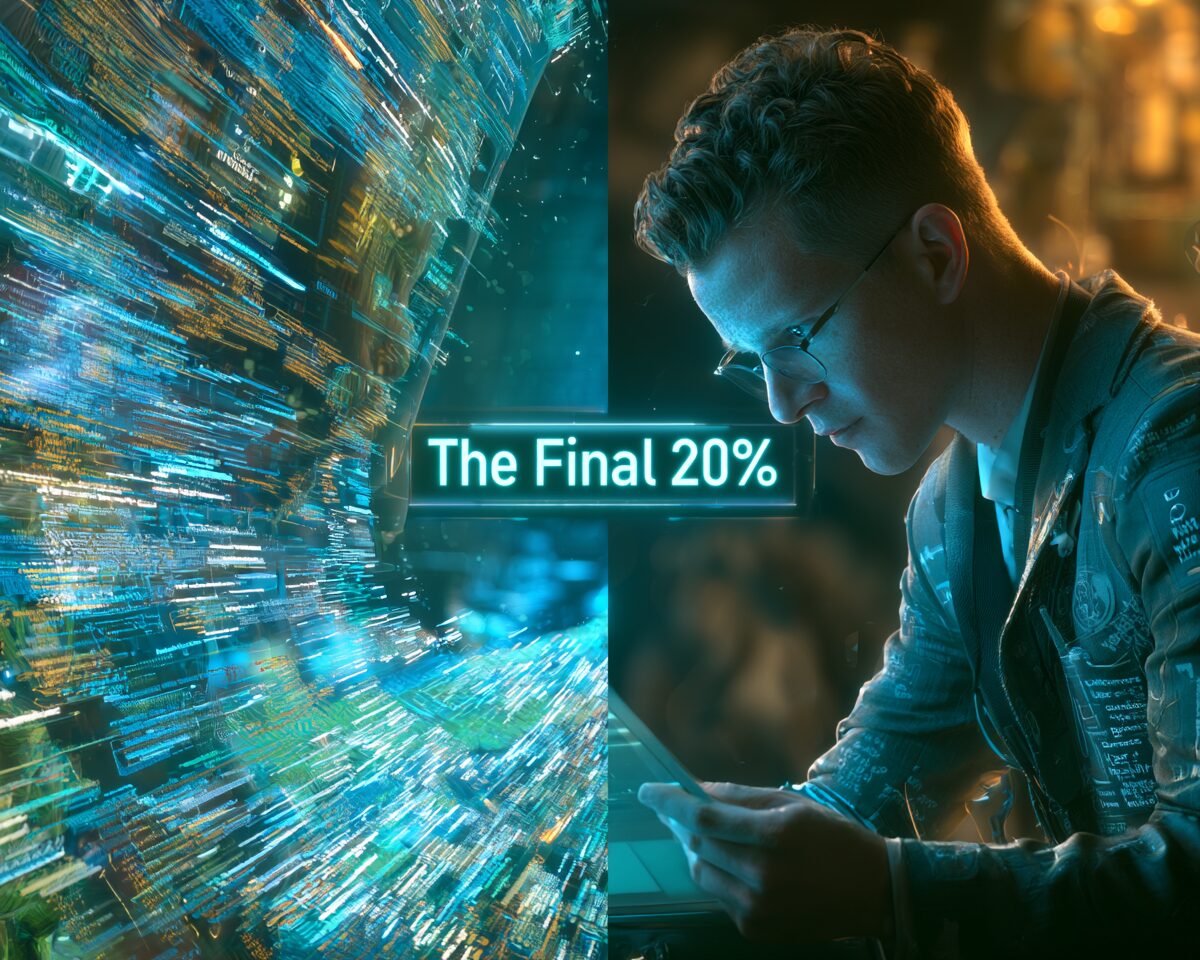
You hit the final 20%.
And suddenly everything becomes difficult.
Welcome to the Last 20%
This is where software becomes reality.
Questions begin appearing.
What happens if someone loses their password?
What happens if payments fail?
What if the user enters invalid information?
How does the application handle thousands of simultaneous users?
What if someone tries to exploit the system?
How are notifications delivered?
What happens when integrations go offline?
How are backups managed?
How does customer support work?
How are errors logged?
How is data secured?
The app that felt finished suddenly feels unfinished.
Because software isn’t merely code.
Software is thousands of decisions interacting together.
AI can generate code.
It struggles to understand all of the consequences.
The Edge Cases Kill Projects
Most software doesn’t fail because of the main feature.
It fails because of the weird scenarios nobody anticipated.
The user uploads a corrupted image.
The email service is down.
The database reaches capacity.
A payment succeeds but the account isn’t updated.
The browser behaves differently on mobile.
Someone uses emojis where text was expected.
An API changes without warning.
These situations sound small.
Collectively, they are enormous.
Experienced developers know this instinctively.
The final stages of software development are often less about building features and more about eliminating failure points.
This is where AI still needs human guidance.
Technical Debt Is Being Created at Machine Speed
AI can write thousands of lines of code astonishingly quickly.
Unfortunately, it can also create thousands of lines of messy code equally quickly.
Duplicate functions.
Conflicting architectures.
Unused dependencies.
Poor naming conventions.
Inefficient database queries.
Redundant systems.
Security vulnerabilities.
Temporary fixes stacked upon temporary fixes.
Many vibe-coded applications become difficult to maintain almost immediately.
Ironically, the faster AI generates code, the easier it becomes to create complexity that nobody fully understands.
Including the person building it.
AI Doesn’t Truly Understand Your Business
AI knows patterns.
It has read enormous amounts of code.
It has seen countless software examples.
But it doesn’t truly understand your business.
It doesn’t understand:
Why your customers buy.
Why users leave.
What creates trust.
What makes your product delightful.
What your brand represents.
What compromises are acceptable.
What compromises could destroy the company.
These are human decisions.
The most successful products in history didn’t win because of code.
They won because someone deeply understood people.
The Real Bottleneck Was Never Programming
Many entrepreneurs assume coding was the primary obstacle.
It wasn’t.
The real challenges have always been:
Understanding customers.
Finding product-market fit.
Creating differentiation.
Building trust.
Marketing effectively.
Providing support.
Making difficult decisions.
Building communities.
Developing sustainable business models.
AI dramatically lowers the barrier to creating software.
It does not eliminate the challenge of building successful businesses.
In some ways, it makes competition even harder.
Because now almost everyone can create software.
Why Most AI Apps Never Launch
Most projects fail because their creators confuse building with shipping.
They keep generating features.
Adding pages.
Improving dashboards.
Creating new integrations.
Experimenting with another prompt.
Then another.
And another.
Eventually, they realize they’ve built something impressive looking but not something truly finished.
The product exists.
The business does not.
The New Skill Isn’t Coding
The winners of the AI era may not be the people who write the most code.
They may be the people who:
Ask better questions.
Understand users better.
Make better decisions.
Prioritize ruthlessly.
Simplify complexity.
Know when to stop building.
Know what truly matters.
The future developer increasingly resembles a product architect, a strategist, and a systems thinker.
AI becomes the construction crew.
Humans become the directors.
How to Finish the Last 20%
The final 20% is where products become companies.
Think Like a Product Manager
Determine what users actually need.
Think Like a Customer
Use the product as if you’ve never seen it before.
Think Like a Tester
Try to break everything.
Think Like an Architect
Examine security, performance, and scalability.
Think Like a Business Owner
Ask whether someone would genuinely pay for this.
Get Real Feedback
Nothing replaces real users.
They will expose problems no prompt ever reveals.
The Hidden Truth
Vibe coding is one of the most important technological shifts of our lifetime.
It is democratizing software creation on a scale we’ve never witnessed before.
Millions of new builders will emerge.
Thousands of incredible companies will be born.
Entire industries will be reinvented.
But the hidden truth remains:
AI can generate applications at superhuman speed.
Shipping products still requires human judgment.
Because the final 20% isn’t really about code.
It’s about understanding people.
And that may remain the most valuable skill in software development for a very long time.
Why AI Can Build 80% of Your App—But Can’t Finish the Last 20%
The Hidden Truth About Vibe Coding and Why Most AI Apps Never Launch
We are living through one of the most extraordinary technological shifts in human history.
For decades, building software required years of study, deep technical expertise, and large teams of developers. Creating an application often took months or years and required substantial capital and resources.
Then everything changed.
Today, an entrepreneur can sit down with artificial intelligence tools like Claude, Cursor, Replit, and AI coding agents and create a functioning application in a single afternoon.
Need a website?
AI can build it.
Need user authentication, payments, dashboards, databases, and analytics?
AI can generate much of it in minutes.
Need a mobile app or SaaS platform?
AI can produce working code faster than many developers can write a project specification.
For the first time in history, millions of people who never considered themselves programmers are becoming software creators.
This movement has become known as vibe coding.
And it may become one of the biggest economic opportunities of our generation.
But hidden beneath all the excitement lies a difficult truth.
Most AI-generated applications never launch.
And the reason has very little to do with coding.
The First 80% Is Becoming Almost Free
Artificial intelligence is exceptionally good at creating momentum.
You ask:
Build me a marketplace.
Done.
Add user profiles.
Done.
Add subscriptions.
Done.
Create analytics dashboards.
Done.
Every prompt creates visible progress.
The app starts looking real.
You see login screens.
Beautiful dashboards.
Landing pages.
Data visualizations.
Payment forms.
The experience is exhilarating.
You begin imagining customers, investors, and millions of users.
It feels like you’re building the future.
In many ways, you are.
But what you’ve usually built is not a finished product.
You’ve built a prototype.
The Last 20% Is Where Products Become Companies
Then the questions begin.
What happens if payments fail?
What happens if users forget their passwords?
What if thousands of users join simultaneously?
What if an integration stops working?
How is customer data protected?
How are backups managed?
How are errors handled?
How is abuse prevented?
What happens if someone uses the software in ways you never expected?
Suddenly, progress slows dramatically.
Because software isn’t simply code.
Software is thousands of decisions interacting together.
The last 20% is where reality shows up.
And reality is complicated.
AI Generates Code. Humans Create Products.
Artificial intelligence is extraordinary at prediction.
It can generate code patterns.
It can explain concepts.
It can write documentation.
It can rapidly iterate.
But AI still struggles with things that define successful businesses:
Judgment.
Taste.
Prioritization.
Customer psychology.
Long-term vision.
Trade-offs.
Understanding people.
The greatest applications in history didn’t win because they had the most code.
They won because they deeply understood human behavior.
Technology solves problems.
Products solve human problems.
Those are not always the same thing.
The Hidden Graveyard of AI Applications
Thousands of applications are being generated every day.
Most will never launch.
Not because their creators lacked intelligence.
Not because the code didn’t work.
But because building software and building a business are entirely different challenges.
Many founders keep adding features.
Another dashboard.
Another integration.
Another prompt.
Another AI-generated capability.
Eventually, they realize they have something impressive to look at but not something people desperately want.
The product exists.
The company does not.
The Great Democratization of Software
This is not bad news.
In fact, it may be one of the most exciting developments in history.
Because coding itself is becoming less of a bottleneck.
The barrier to creation has collapsed.
The winners of this new era may not be the people who know the most programming languages.
The winners may be the people who:
Understand customers.
Identify opportunities.
Create communities.
Build trust.
Think strategically.
Move quickly.
Ask better questions.
Understand systems.
Have vision.
The future builder increasingly resembles an entrepreneur, architect, and product strategist.
AI becomes the construction crew.
Humans become the directors.
The Real Solution: Human + AI Collaboration
The answer is not to reject AI.
The answer is learning how to collaborate with it.
The most successful builders of the future will likely follow a new formula:
AI Builds
Generate interfaces, databases, automations, and features.
Humans Curate
Determine what actually matters.
Users Test
Provide feedback from reality.
Humans Refine
Improve usability, simplicity, and customer experience.
AI Improves
Generate the next iteration.
Repeat
This cycle can dramatically accelerate innovation.
But it still requires human judgment.
Because the final 20% is not a coding problem.
It’s a thinking problem.
The Rise of the AI Builder Economy
This is where enormous opportunities are emerging.
Businesses increasingly need people who understand how to leverage AI, automate workflows, connect systems, and rapidly turn ideas into products.
This is precisely the mission behind:
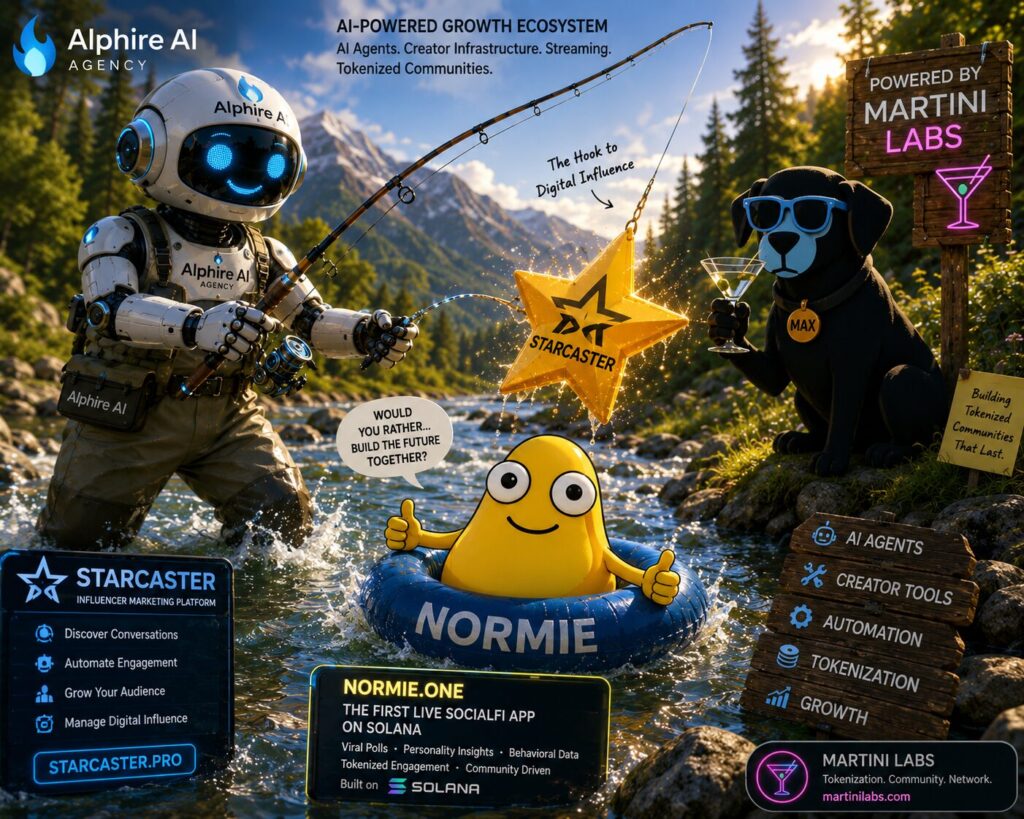
Alphire
Alphire focuses on helping businesses understand and implement artificial intelligence, automation, AI agents, and growth systems that transform ideas into scalable opportunities.
Alphire AI Agency
The agency helps organizations build AI-powered growth engines through:
• AI Agents and Copilots
• Workflow Automation
• Knowledge Systems and RAG
• AI Content Pipelines
• Data Enrichment and Business Automation
The future belongs to organizations that can effectively collaborate with intelligent systems.
Distribution Matters More Than Ever
Another hidden truth of the AI era:
Anyone can build software.
Far fewer people can attract users.
Distribution is becoming one of the most valuable skills in business.
This is where creator tools become essential.
Starcaster Pro
Starcaster Pro is designed as an AI-powered influencer marketing system that helps creators and businesses:
• Discover audiences
• Create and distribute content
• Automate marketing workflows
• Increase visibility across platforms
• Build communities and engagement loops
In a world where software creation becomes nearly free, attention becomes increasingly valuable.
Communities May Become More Valuable Than Companies
The next evolution may go even further.
We’re entering an era where communities themselves can become powerful economic systems.
This is the vision behind:
Normie
Normie explores personality, participation, and social engagement through fun, interactive experiences and behavioral insights.
But its broader vision points toward something much larger:
The DEO
Decentralized Engagement Organization
From Audience to Owners.
From Participation to Value.
From Community to Collective Prosperity.
Imagine communities where people don’t simply consume content.
They participate.
They contribute.
They learn.
They create.
They engage.
And eventually share in the value they help generate.
AI makes building products easier.
DEOs may make building communities more valuable.
The Biggest Opportunity of the AI Era
The hidden truth about vibe coding is not that AI has limitations.
Every technology has limitations.
The real insight is far more exciting.
Because software is becoming easier to build, human qualities become more important.
Vision.
Creativity.
Curiosity.
Empathy.
Leadership.
Community.
Trust.
Judgment.
The final 20% that AI struggles to complete is often the part that makes businesses extraordinary.
And that last 20% may end up creating 80% of the value.
The future will not belong to humans or machines alone.
It will belong to people who learn how to direct intelligent systems, build meaningful products, and create communities that want to participate in something larger than themselves.
That revolution has already begun.