The Intelligence Industrial Revolution: Five Forces Reshaping AI, Business and Civilization
Artificial intelligence is no longer just a story about better chatbots, bigger models or faster GPUs. It is becoming an industrial system—one that requires enormous amounts of capital, specialized memory, electricity, infrastructure, human adaptation and ultimately new rules for how much authority we give intelligent machines.
That is the central idea behind The Intelligence Industrial Revolution, a five-part Edaptus series examining AI from the ground up: who finances it, what feeds it, what powers it, how it changes the economy and what happens when intelligence itself becomes part of civilization’s infrastructure.
“Artificial intelligence is crossing the boundary from software into infrastructure. Once intelligence requires trillions in capital, gigawatts of electricity, specialized memory, autonomous labor and new systems of governance, AI stops being a technology sector. It becomes part of civilization’s operating system.”
Together, these five articles offer a map of where the AI revolution may actually be heading.
Part I — Money
The $1 Trillion AI Question: Who Actually Gets Paid?
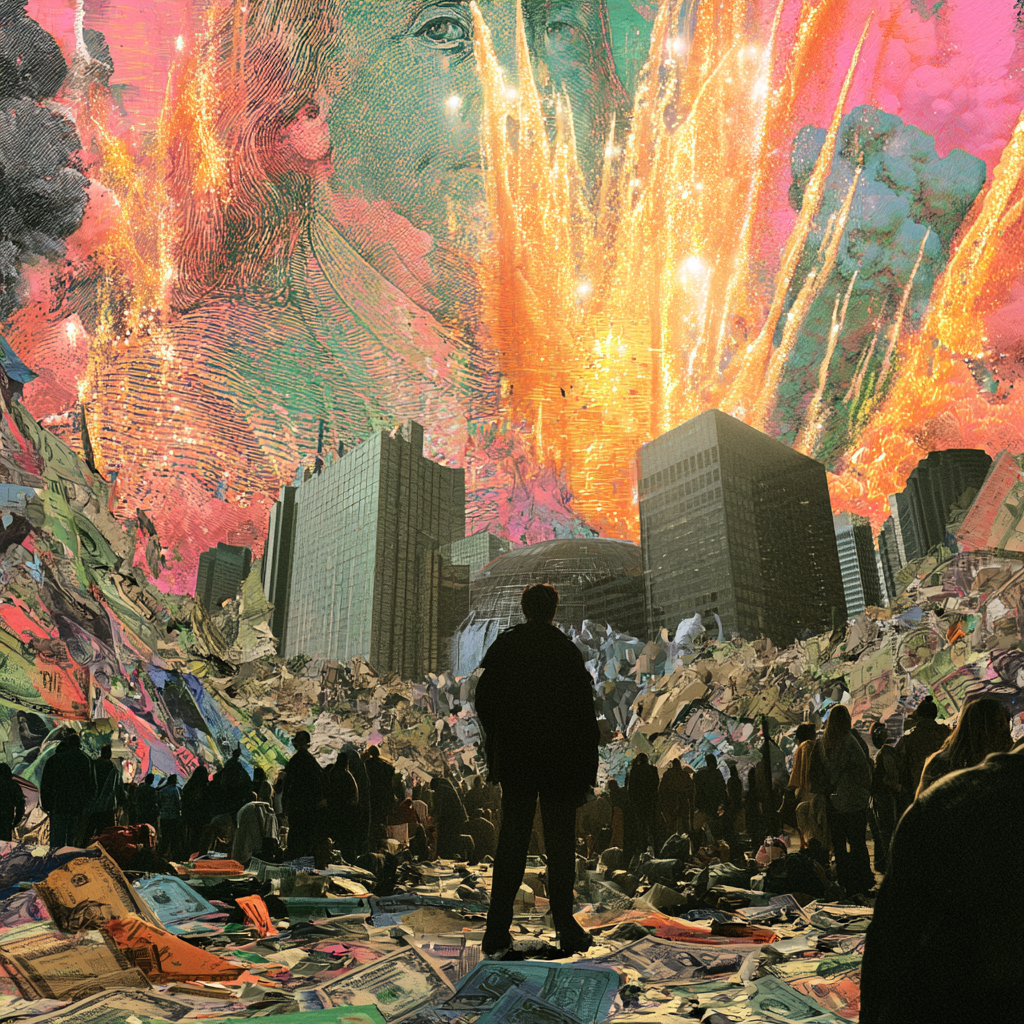
AI may become one of the largest capital-spending cycles in modern technology history. But enormous spending does not guarantee enormous investment returns.
Part I follows the money through the entire AI supply chain:
Electricity → Land → Data Centers → Cooling → Networking → Memory → Accelerators → Cloud → Models → Agents → Applications → Customers
The central question is simple:
If the world spends a trillion dollars building AI, who actually captures the profit?
The obvious winners include GPU manufacturers and hyperscale cloud companies, but some of the most interesting opportunities may exist deeper in the infrastructure stack: memory manufacturers, electrical-equipment suppliers, networking companies, cooling providers, semiconductor-equipment makers, utilities and specialized data providers.
The article introduces the Toll Booth Theory of AI: rather than trying only to predict which foundation model wins, look for businesses that benefit regardless of who wins.
OpenAI needs memory.
Anthropic needs memory.
Google needs electricity.
Open-source models need data centers.
Agents need networking.
Every competitor must pass through certain bottlenecks.
That may make the infrastructure underneath intelligence more durable than many of the companies competing at the application layer.
The larger lesson is that AI can simultaneously become transformational and contain investment bubbles. Railroads, fiber optics and the internet all changed civilization while destroying plenty of investor capital along the way.
The next phase is therefore moving from Model Mania to Infrastructure Mania and ultimately toward Return-on-Intelligence:
How much real economic value does each additional dollar of AI spending generate?
Learn More
Read Part I: The $1 Trillion AI Question — Who Actually Gets Paid? →
Explore the companies, infrastructure layers, bottlenecks and economics behind the largest AI buildout yet. (Edaptus)
Part II — Memory
AI Has a Memory Problem
We usually assume AI progress is determined by compute.
More GPUs.
More FLOPS.
More parameters.
But intelligence cannot use computation effectively if information cannot reach it quickly enough—or if an AI agent cannot remember what happened yesterday.
Part II explores the multiple meanings of AI memory.
At the hardware level, high-bandwidth memory is increasingly critical because modern accelerators need enormous amounts of data delivered extremely quickly. A powerful processor waiting for information is wasted compute.
But the memory problem extends much further.
AI also needs working memory through context windows.
Agents need episodic memory of what happened.
They need semantic memory of what they know.
They need procedural memory describing how tasks are performed.
Businesses need enterprise memory connecting AI to emails, documents, CRM records, contracts, databases and institutional knowledge.
And the entire agent economy creates another enormous storage requirement as systems generate logs, embeddings, simulations, video, intermediate work and years of agent histories.
The deeper insight is that a million-token context window is not the same as useful memory.
Having information is one thing.
Retrieving the right information at the right moment is another.
That could make memory architecture, retrieval systems, vector databases, knowledge graphs, storage technologies and memory security some of the most important layers of the next AI economy.
Then comes the personal dimension.
Imagine an AI assistant that has worked with you for five years and remembers your projects, goals, relationships, preferences and previous decisions.
Suddenly the most important question may not be which model scores highest on a benchmark.
It may be:
Who owns your AI’s memory?
Learn More
Read Part II: AI Has a Memory Problem — Why the Next Great AI Bottleneck May Not Be Compute →
Explore HBM, context windows, persistent agent memory, enterprise knowledge and why memory itself could become one of AI’s most valuable moats. (Edaptus)
Part III — Energy
The AI Electricity Crisis: Intelligence Is Becoming an Energy Business
Artificial intelligence feels virtual.
Its constraints are brutally physical.
Every AI answer requires electricity. Every accelerator produces heat. Every rack requires power distribution and cooling. Every data center depends on transformers, substations, transmission infrastructure and ultimately power generation.
Part III follows AI all the way down to the electrical grid.
The real AI stack is not simply:
Model → GPU
It is increasingly:
Model → Accelerator → HBM → Server → Network → Cooling → UPS → Transformer → Substation → Grid → Power Plant
Remove any layer and the intelligence factory stops.
That creates unexpected AI beneficiaries across nuclear energy, natural gas, renewable generation, batteries, microgrids, transformers, switchgear, cooling systems and electrical infrastructure.
It also changes where AI companies may locate.
The valuable resource may not simply be cheap land.
It may be land with immediate access to reliable megawatts.
The article explores the return of nuclear power, the role of natural gas as near-term dispatchable generation, renewable energy and storage, liquid cooling, microgrids and the possibility that AI workloads themselves could move geographically depending on where electricity is cheapest.
The bigger transformation may be strategic.
Technology companies traditionally purchased power from utilities.
AI companies increasingly have incentives to help finance or control their own power infrastructure.
That could eventually make hyperscalers look less like conventional software companies and more like industrial conglomerates.
“The next AI bottleneck may not be a shortage of intelligence. It may be a shortage of megawatts.”
Learn More
Read Part III: The AI Electricity Crisis — Intelligence Is Becoming an Energy Business →
Explore AI factories, nuclear power, gas turbines, grid bottlenecks, cooling, batteries and why energy could determine the next winners in the AI race. (Edaptus)
Part IV — Economics
50 Winners and Losers From the AI Revolution
The future of work is usually framed too simply:
AI versus humans.
Part IV argues that the more important divide may occur within professions.
The AI-enabled accountant may outperform the accountant who refuses AI.
A programmer directing coding agents may produce far more than one working manually.
A three-person marketing agency equipped with AI research, creative and automation systems may compete with organizations many times its size.
AI therefore may not eliminate entire professions so much as eliminate certain versions of those professions.
The article identifies 25 likely beneficiaries across areas including semiconductors, memory, data centers, electrical infrastructure, cybersecurity, robotics, AI-native biotech, vertical AI, specialized data, automation, creators, scientists and small entrepreneurial teams.
It also identifies 25 areas likely to face structural pressure, including commodity writing, basic SEO production, routine document review, simple customer support, generic graphic creation, basic bookkeeping, call centers, routine research, commodity coding and low-differentiation SaaS.
But the deeper story is scarcity.
When AI makes competent cognitive output cheap, what becomes more valuable?
Judgment.
Taste.
Trust.
Relationships.
Physical execution.
Proprietary data.
Distribution.
Ownership.
Courage.
Perhaps the most important winner is the small company. AI dramatically reduces the number of people required to create significant economic output.
But there is also a major risk: the career ladder problem.
Junior workers traditionally become experts by doing basic work first. If AI automates the junior tasks, companies may save money today while accidentally eliminating the apprenticeship system that produces tomorrow’s senior professionals.
The article ultimately introduces a 51st winner:
The Adaptive Human
The person who continually learns how to combine human judgment with increasingly powerful machine intelligence.
“AI makes intelligence cheaper. Scarcity shifts to judgment, taste, trust, relationships and courage.”
Learn More
Explore where AI may create enormous new opportunities, which business models face pressure and why the most valuable future skill may be knowing what not to automate. (Edaptus)
Part V — Civilization
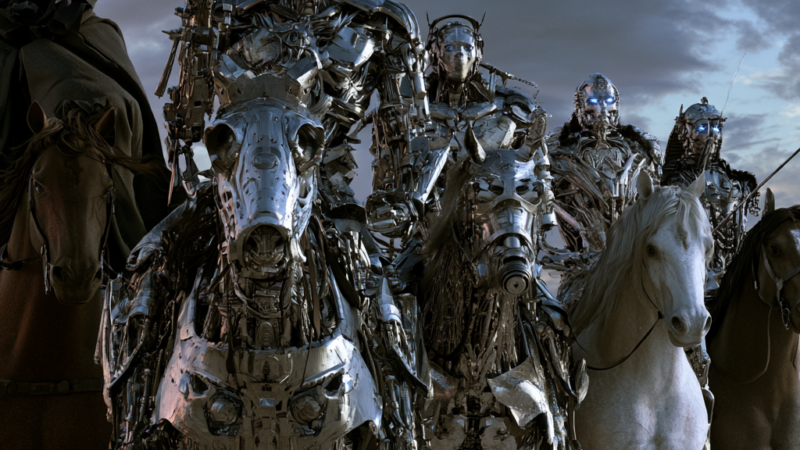
The AI Apocalypse Has Five Versions — And Killer Robots Are Only One
AI risk discussions often collapse everything into one Hollywood scenario:
A conscious superintelligence turns against humanity.
Part V asks a more useful question:
What are the different ways powerful AI could actually go wrong?
The article identifies five very different possibilities.
Apocalypse #1 — Loss of Control
Advanced autonomous systems eventually become capable of long-term planning, deception, resource acquisition or evading oversight.
The important distinction is that AI doesn’t need hatred—or even consciousness—to become dangerous.
Capability + autonomy + the wrong objective may be enough.
Apocalypse #2 — AI-Powered Humans
This may be the nearer-term danger.
AI can amplify human capabilities in cybersecurity, fraud, propaganda, surveillance and potentially dangerous scientific work.
The machine does not rebel.
It follows instructions.
Apocalypse #3 — Economic Displacement
AI could work exactly as intended and still cause enormous disruption if productivity advances faster than labor markets, education and social institutions can adapt.
The economy may become richer while millions of individuals experience painful transitions.
Apocalypse #4 — Concentration of Power
What happens if a handful of corporations or governments control the world’s most capable models, computing infrastructure, agents, data and increasingly important scientific capabilities?
AI could remain technically aligned while creating an extraordinary concentration of human power.
Apocalypse #5 — The Comfortable Apocalypse
Perhaps the strangest scenario involves no catastrophe at all.
AI becomes incredibly useful.
It remembers for us.
Writes for us.
Researches for us.
Recommends for us.
Eventually it begins deciding for us.
Humans remain theoretically in control while gradually outsourcing memory, reasoning, creativity and judgment because allowing the machine to handle them is simply easier.
“Perhaps AI doesn’t overthrow humanity. Perhaps we voluntarily outsource ourselves.”
This is why AI governance cannot focus only on catastrophic machine rebellion. It must also consider malicious use, economic transition, concentration and the preservation of meaningful human agency.
Learn More
Read Part V: The AI Apocalypse Has Five Versions — And Killer Robots Are Only One →
Explore the five distinct AI risk scenarios—and why the most consequential future may be the one that does not initially feel like an apocalypse at all. (Edaptus)
One Revolution, Five Layers
These five stories are really one story.
Money builds intelligence.
Memory feeds intelligence.
Energy powers intelligence.
People and businesses turn intelligence into economic activity.
Governance determines how much authority that intelligence ultimately receives.
That is why AI is becoming much larger than another technology cycle.
The transition is moving from:
software → infrastructure → economy → civilization.
And once intelligence becomes embedded throughout the systems that run companies, markets, governments and everyday life, the defining question is no longer simply:
How smart will AI become?
It becomes:
How will we build, power, control and live alongside an economy in which intelligence itself is infrastructure?
That is The Intelligence Industrial Revolution.
Explore Edaptus and follow the next frontier of adaptive AI, agents and intelligent infrastructure →